This is a four-part series on self-publishing. So far, I’ve discussed working with a formatting /designer and touched on the cover illustrations, design, ISBN, barcode, and LCCN.
This is Part2 and goes in-depth on the last three subjects.
Once you’ve chosen a book formatter and have had your front cover done, it’s time to consider the International Standard Book Number (ISBN), barcode, and Library of Congress Control Number (LCCN).
A side note: As I was recently asked about this, you should copyright your book before getting an LCCN. You can do this at https://www.copyright.gov/
THE ISBN
According to MyIdentifiers.com, the ISBN “identifies a book’s specific format, edition, and publisher. It’s the “global standard for book identification and is required by most retailers.” It also provides metadata for your book, which helps readers find it. This 13-digit number is essential for paper books, but can also be used for digital formats.
Once an ISBN is assigned to a book, it cannot be used for any other version (format) of that book or any other book. Each format of your book needs its own ISBN.
There are a number of reasons you will need to give your book a new ISBN, including:
- Each version (format) of your book must have its own number.
- If you change the content within the book significantly, making it a new version or edition, you need a new ISBN. This includes adding a forward or a new chapter or content.
- If you change the cover of your book, you need a new ISBN.
- If you have a single book and then write another, you will need a third ISBN if you put Book 1 and Book 2 together in another book.
The ISBN goes on the copyright page and back cover of your book – the book cover designer will include it on the back cover in the form of a barcode. Or the publishing platform you’re using, will include it. The information within the ISBN provides the price, usually.
The safest place to purchase your ISBNs is from Bowker’s at www.myidentifiers.com
To find out more about the ISBN, go to:
https://www.myidentifiers.com/identify-protect-your-book/isbn/
Something new authors should be aware of:
If you use a self-publishing service or company to get your book out there, they will most likely provide the ISBN for you.
Sounds convenient, right?
Well, whoever provides the ISBN will be listed as the publisher of the book.
Do you really want a vanity press, if that’s who you’re using, or a book formatter being listed as the publisher of your book?
Assigning your ISBNs
When you’re ready to self-publish your book, you’ll need to ASSIGN it one of your ISBNs and you’ll need the following information.
-book title
-author name
-author bio
-format (e.g.,paperback, ebook, or hardcover)
-publisher/imprint name
-description (optional, but important)
-book cover image (optional, but important)
This is what the dashboard will look like before you assign your book (the highlighted area is where my ISBN is):

This is what the dashboard will look like after you assign your book:

Whether you’re publishing one book or ten books, get your own ISBNs.
Again, Bowker’s MyIdentifiers.com is where to go. As of the writing of this article, the cost is $125 for one ISBN and $295 for ten.
And they never expire!
THE BARCODE
Your PRINTED book MUST have a barcode to be listed in major bookstores and libraries.
If you DON’T intend to sell your printed books through the major stores or libraries, you won’t need a barcode. But the fee is nominal, so it’d be wise to get it anyway. You never know; you may have a change of heart down the road.
You also don’t need a barcode for digital books.
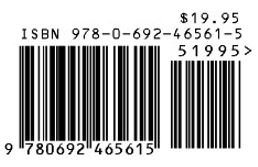
According to MyIdentifiers, “A barcode is a graphical representation of your printed book’s ISBN and price – and buying a barcode is a low-cost investment in your book’s success.”
Below is an example of the barcode from MyIdentifiers:
You should get your barcode from the service you get the ISBN. It may be free if you get it when you purchase the ISBN.
You can check out: https://www.myidentifiers.com/identify-protect-your-book/barcode
If you didn’t think of it when you bought your ISBN, there are services that will convert the ISBN into a barcode for free.
Do you need to place the retail price of your book in the barcode?
If you’re selling only digital books, this is a moot point (they don’t need a a barcode). But if you’re selling print books, it is wise to include the retail price in your barcode. The major brick-and-mortar bookstores and book distributors require the price in the barcode for inventory processing and for speed and convenience at checkout.
Keep in mind that if you have the price reflected in the barcode and you change the price of your book after it’s published, the barcode must reflect the new price. This means you need a new barcode, and it must be placed on the back cover. This means the back cover must be redesigned and reuploaded to your publishing platform.
It’s quite the conundrum.
TIP: Most self-publishers don’t include the book’s price in the barcode for the latter reason. I don’t include the price for my books.
THE LCCN
The Library of Congress (in Washington, D.C.) allows you to record your book in its system. Libraries all over the U.S. use this system to determine how to categorize your book if they are interested in it.
It’s free to get an LCCN, and it could take one to two weeks to receive. I got mine in two days.
According to the Library of Congress, the “catalog control number is a unique identification number that the Library of Congress assigns to the catalog record created for each book in its cataloged collections. Librarians use it to locate a specific Library of Congress catalog record in the national databases and to order catalog cards from the Library of Congress or from commercial suppliers.”
If your book has yet to be published, but you want the LCCN for the copyright page, you can get a Preassigned Control Number (PNC). This enables “the Library of Congress to assign a control number in advance of publication to those titles that may be added to the Library’s collections.”
Once your book is published, you must send them a copy of the paper book to make the number official.
All mainstream books have an LCCN, so take the time to get one for your book/s.
What you need to apply for an LCCN:
- the name of the author
- the name of the publisher
- an image of the book cover
- a description of the book.
That was about it. It’s a painless and quick process.
Regarding #2 above, have the name you’ll be using as ‘publisher’ in hand. Think about it carefully. This will be the name listed as publisher for the ISBN and the LCCN. And it will appear as the publisher on your copyright page and be listed as such in the venues you sell your book through.
If you’ll have multiple books, you’ll want the same publishing name. It should be part of your branding.
ADDING METADATA
You’ll need a good description of your book when you purchase your ISBN and when you get your LCCN. You’ll be asked to fill in information about your book. Make that information effective. It’s what will help get your book found. This could very well lead to sales.
Any information you’re asked to provide for your book, think about it carefully … think marketing.
Finally, once your book is published, you will need to send a copy to the Library of Congress. The site will provide the information for this when you’re registering for the LCCN.
Hope this helps you on your self-publishing journey!

I’m a working children’s ghostwriter, rewriter, editor, and self-publisher. I can help turn your story into a book you’ll be proud to be the author of, one that’s publishable and marketable.

OTHER HELP I OFFER:

HOW TO WRITE A CHILDREN'S FICTION BOOK
A DIY book to help you write your own children’s book.

FICTION WRITING FOR CHILDREN eCOURSE
4-Weeks / 8 Sections Guided Self-Study Mentoring Program

WRITERS ON THE MOVE SELF-PUBLISHING SERVICE
Self-publishing help for children’s authors (picture books and chapter books)

You can contact me at kcioffiventrice@gmail.com.

Building a Writing Career Takes Practice and Focus
3 Steps to Querying Publishers and Agents
Balance in Fiction Writing – The Major Elements

Hello Karen,
I’m going to publish my children’s book in Oct 2025.
I just received my LCCN today but have not gotten my book a formal copyright. Can I still do this?
Thanks in advance for your response.
Hi Bridget. Yes, you can get your copyright after the LCCN. They’re two different processes. Thanks for stopping by!
Thanks for this! Very helpful. Do you know – when you apply for the LCCN, can you put your pen name as the “contributor”? or does it need to be your “real” name? Thanks!
Hi, Lauren. It’s been a while since I’ve applied for the LCCN, but I think you can use your pen name. You might check out this article:
https://anssacrl.wordpress.com/publications/cataloging-qa/representation-of-pseudonyms-in-the-library-of-congress-name-authority-file-2016-april/