Children, the environment, and storytelling: a few simple words that, when combined, can become a powerhouse for teaching children the importance of taking care of our planet.
As an author, ghostwriter, rewriter, and member of several writing groups, I’ve come to a realization. We, as a community, have a responsibility to advocate for incorporating environmentally friendly conservation tidbits into our storytelling. Yet, I’ve noticed a gap. Why aren’t more of us taking up this cause?
Writers have the perfect format for teaching and molding children, and the perfect opportunity to do so.
From picture books to young adult novels, conservation and the environment are topics that authors should consider writing about or at least weaving into their stories. The saying goes, “You are what you eat.” Well, children become what they learn, through their environment, including schooling or reading.
Suppose young children are afforded reading material that paints a picture of the benefits and consequences of conservation in simple and entertaining stories. What better way to instill a sense that they can be part of the solution and help protect our environment?
If those same children, as they grow up, continue to read fiction and non-fiction stories that mention conservation and our environment, how much more will it impact them and become part of their lives?
While most authors may not want to devote their time to writing books about the environment, just a sentence or scene woven into a story will certainly have an effect. It can be a subtle mention.
For example, if it’s a scene with friends hanging out or on their way somewhere, one or two sentences in the scene might be:
Lucas held the soda bottle, aimed carefully, and tossed it right into the trash can.
“Nice shot, Lucas, but that goes in the recycling pail,” said Thomas.
This brief mention would be the extent of it in the story. It’s short, almost unseen, yet it becomes a part of the reader’s experience.
Isn’t this what writers want to do: leave an imprint in the minds and hearts of their readers? And it’s all the more gratifying if it’s a child’s mind and heart that you’re helping to develop and mold.
Why not make our impressionable and lasting words take root? In addition to entertaining through our books and stories, we can make a difference in our future, our children’s future, and the planet’s future.
I took advantage of storytelling to engage children and raise awareness about our environment through a three-book picture book series (a fourth in the works): The Adventures of Planetman.
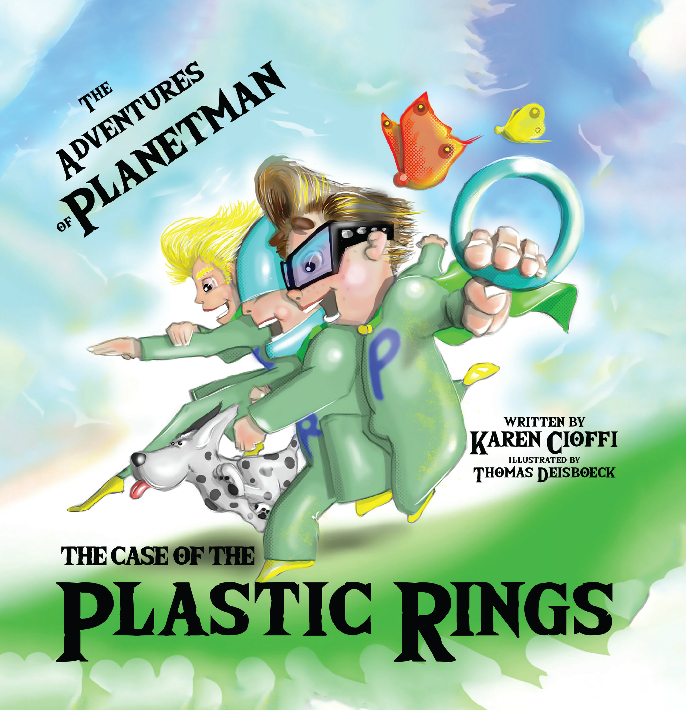
The first book in the series is THE CASE OF THE PLASTIC RINGS.
The second book in the series is THE CASE OF THE SLIMY GOO.
The third book in the series is THE CASE OF THE STRANDED CUB.
You can check out the Books page on my website for information on all my books.
These books will be an asset to any children’s home library or school library. Check them out to see how you can weave tips and awareness into your books.

I’m a working children’s ghostwriter, rewriter, editor, and self-publisher. I help turn your idea, outline, or manuscript into a book you’ll be proud to call your own—and provide hands-on guidance through every step of the self-publishing process.

OTHER HELP I OFFER:

HOW TO WRITE A CHILDREN'S FICTION BOOK
A 200+ page DIY book that will help you write your own children’s book.

FICTION WRITING FOR CHILDREN eCOURSE
4-, 8-, 12-Weeks / 8 Sections / Instructor Guided Self-Study Program

You can contact me at: kcioffiventrice@gmail.com.

Characters or Story – Which Comes First?
Writing Children’s Books – Genre Differences
10 Rules for Writing Children’s Stories

5 thoughts on “Children, the Environment, and Storytelling”